
Hemodialysis: In Center vs. At Home
Hemodialysis: In Center vs. At Home
In Center vs. At Home
Your lifestyle will largely determine which type of dialysis and where you chose to do it.
Hemodialysis can either be performed at a dialysis center where a nurse or technician does dialysis for you,
or it can be done by a machine within the home.
In a Center Hemodialysis
In-center hemodialysis is a form of dialysis performed at a specialized dialysis center under the supervision of trained healthcare professionals. During treatment, blood is filtered through a dialysis machine to remove waste and excess fluid, then safely returned to the body. Treatments are typically done several times a week on a scheduled basis. In-center hemodialysis provides close medical monitoring and support, making it a reliable option for patients who prefer or require treatment in a clinical setting.
Our goal is to ensure safe, effective treatment while supporting comfort, education, and long-term health.

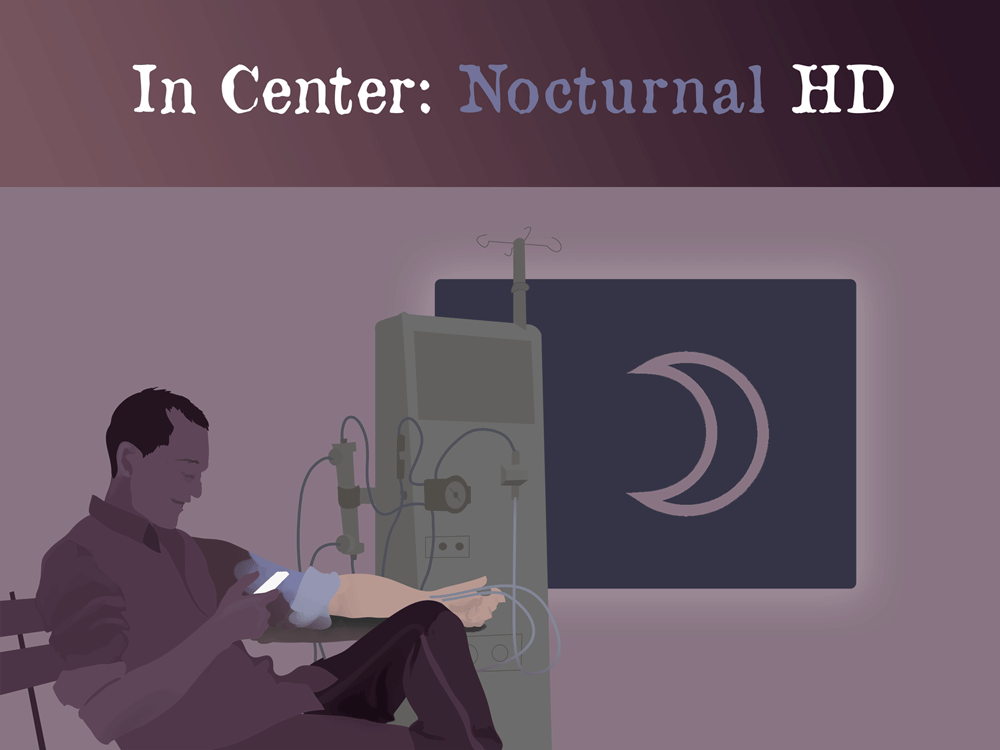
Nocturnal Hemodialysis:
Nocturnal hemodialysis is a form of dialysis performed overnight while you sleep, usually at home. Because treatments are longer and gentler, this type of dialysis can more closely mimic how healthy kidneys work. Many patients experience improved energy, better blood pressure control, and fewer dietary restrictions. Nocturnal dialysis may also allow for more flexibility during the day, making it a good option for patients who value independence and daytime freedom
Home Hemodialysis
Home hemodialysis allows patients to perform dialysis in the comfort of their own home, often with the support of a care partner. Treatments can be done more frequently and on a schedule that fits your lifestyle. With proper training and ongoing medical support, many patients feel more in control of their care and report improved well-being.
Home hemodialysis offers flexibility, personalized scheduling, and a more active role in managing kidney health.

1. Short Daily Home HD: Done 5-7 times / week, 2-3 hours each treatment. Since you are doing dialysis more often, less fluid needs to be removed each time. This reduces symptoms like cramping, HA, nausea and feeling ‘washed out’ after dialysis treatment
2. Nocturnal Home Hemodialysis: Longer treatments at night while you sleep. With nocturnal hemodialysis the blood flow is much slower hence it takes almost 6 – 8 hours for dialysis, as opposed to the more common 3-4 hours (with a higher blood flow)
3. Conventional home hemodialysis: Same as in center. 3-4 times per week for 3-4 hours each treatment
Remember, you can combine any of these regimens to make it suitable to your schedule. The most important thing is that you are getting adequate dialysis. For more information, talk to you doctor.
- More frequent dialysis means less fluid removal with each treatment. With less fluid removal you fell less ‘washed out’ after dialysis
- More energy
- Better sleep
- Better quality of life
- Few hospital visits
- Blood pressure is under better control
- Less medication is required to prevent anemia and high phosphorus levels
- Do it on your own time!
Care partners are very important; that is, a person at home who is willing to help you during your treatment. This can be a friend or family member. Patients can also hire a nurse or technician to be their partner.
Nurses will draw your blood monthly to measure progress, and you will have to weigh yourself before and after treatments. The goal is to achieve your ‘dry weight’, which is the weight at which you are comfortable breathing and don’t have excess water. Sometimes salt/fluids in your diet will need to be adjusted.
This is a formula used to make sure you are getting adequate dialysis. In other words, are we cleaning you blood well enough?
- K – dialyzer clearance of urea.
- t – dialysis time.
- V – volume of distribution of urea (approximately equal to patient’s total body water).
This is typically checked once a month. If the goal Kt/V is not met, adjustments are made in the treatment to achieve the goal.
There’s a difference between quantity and quality of urine. A dialysis patient can still make more than a liter of urine, but this doesn’t guarantee that they are excreting adequate amounts of solutes and waste. It also depends upon the reason dialysis was initiated in the first place.
As far as stopping dialysis, this would depend on the reason you started. Each case is different, so talk to your nephrologist for the answer. In some cases, if you started dialysis because of an acute kidney injury, there is a chance of recovery after several weeks/months.
If you have advanced chronic kidney disease that has progressed to End Stage Renal Disease, you may need to be on dialysis until you get a kidney transplant. Talk to your health care provider.
Master Your Kidney Health Journey.
Don't hesitate—reach out to our team today to discuss your kidney health
concerns and take the next step toward better well-being.