
Low Potasium Diet
Low Potasium Diet
A Guide for Kidney Patients
Potassium is an important mineral that helps your muscles, nerves, and heart function properly.
However, as kidney function declines, the kidneys may have difficulty removing excess potassium from the blood, which can lead to unsafe levels.
A low potassium diet may be recommended for some patients with chronic kidney disease but not everyone needs to restrict potassium.
The decision to start a low potassium diet depends on your individual kidney function (GFR), lab results, medications, and overall health.
Always speak with your physician before making potassium restrictions.
What Is Considered a Low Potassium Diet?
In general, a low potassium diet typically limits potassium intake to about 2,000–2,500 mg per day, though this amount can vary from person to person.
Your specific target should be personalized and guided by your healthcare provider based on:
- Your stage of kidney disease
- Blood potassium levels
- Medications (such as ACE inhibitors or diuretics)
- Other medical conditions
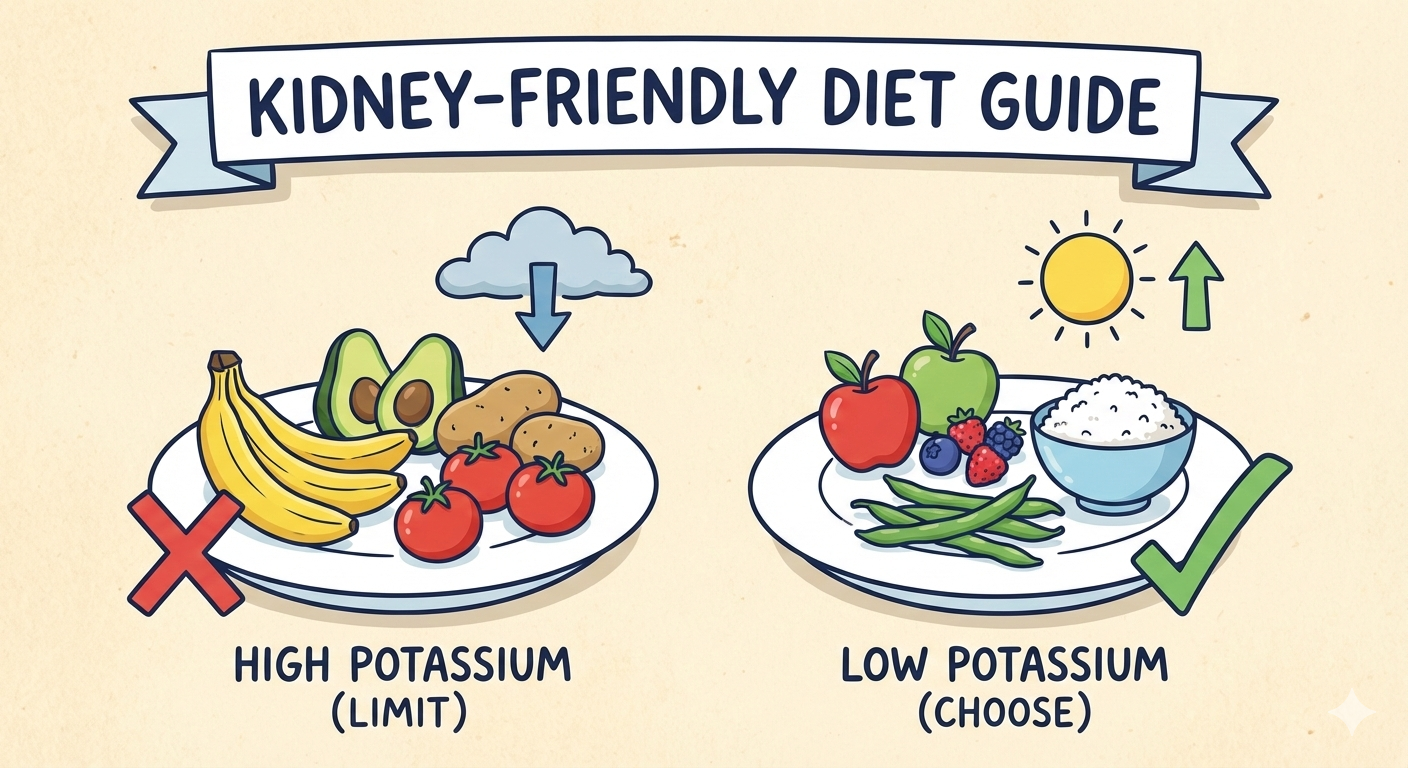
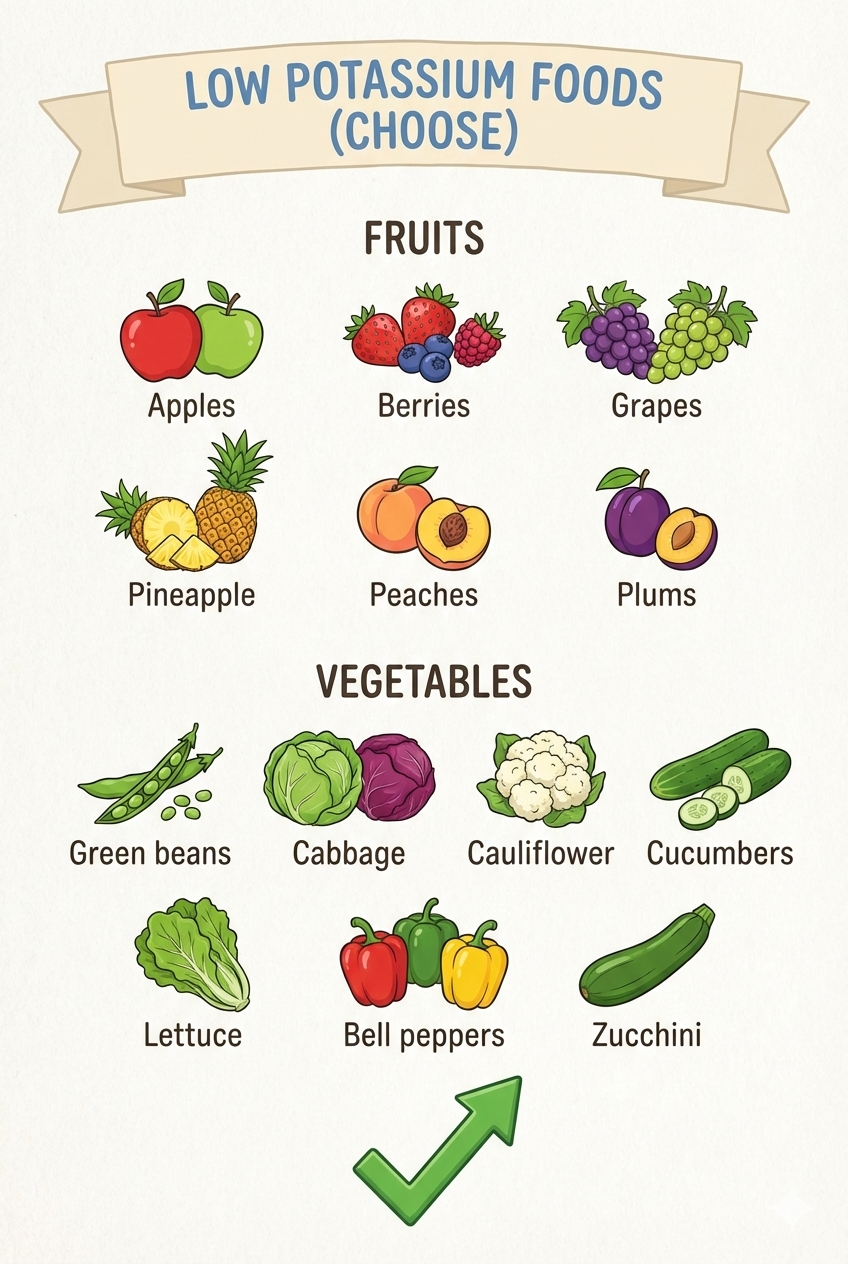
Choosing Lower Potassium Fruits & Vegetables
You do not need to avoid fruits and vegetables completely. Instead, the focus is on choosing lower potassium options and managing portion sizes.
Lower potassium options (when eaten in appropriate portions) may include:
Fruits
- Apples
- Berries (strawberries, blueberries, raspberries)
- Grapes
- Pineapple
- Peaches
- Plums
Vegetables
- Green beans
- Cabbage
- Cauliflower
- Cucumbers
- Lettuce
- Bell peppers
- Zucchini
Higher potassium foods (such as bananas, oranges, avocados, tomatoes, potatoes, spinach, and dried fruits) may need to be limited or avoided depending on your labs and kidney function.
Portion size matters—even low potassium foods can add up if eaten in large amounts.
Helpful Cooking Tips:
Certain preparation methods can help reduce potassium content in vegetables:
- Peel and cut vegetables into small pieces
- Boil in a large amount of water
- Drain the water completely before eating
These techniques may be helpful for specific vegetables, but they are not necessary for everyone and should be discussed with your care team.
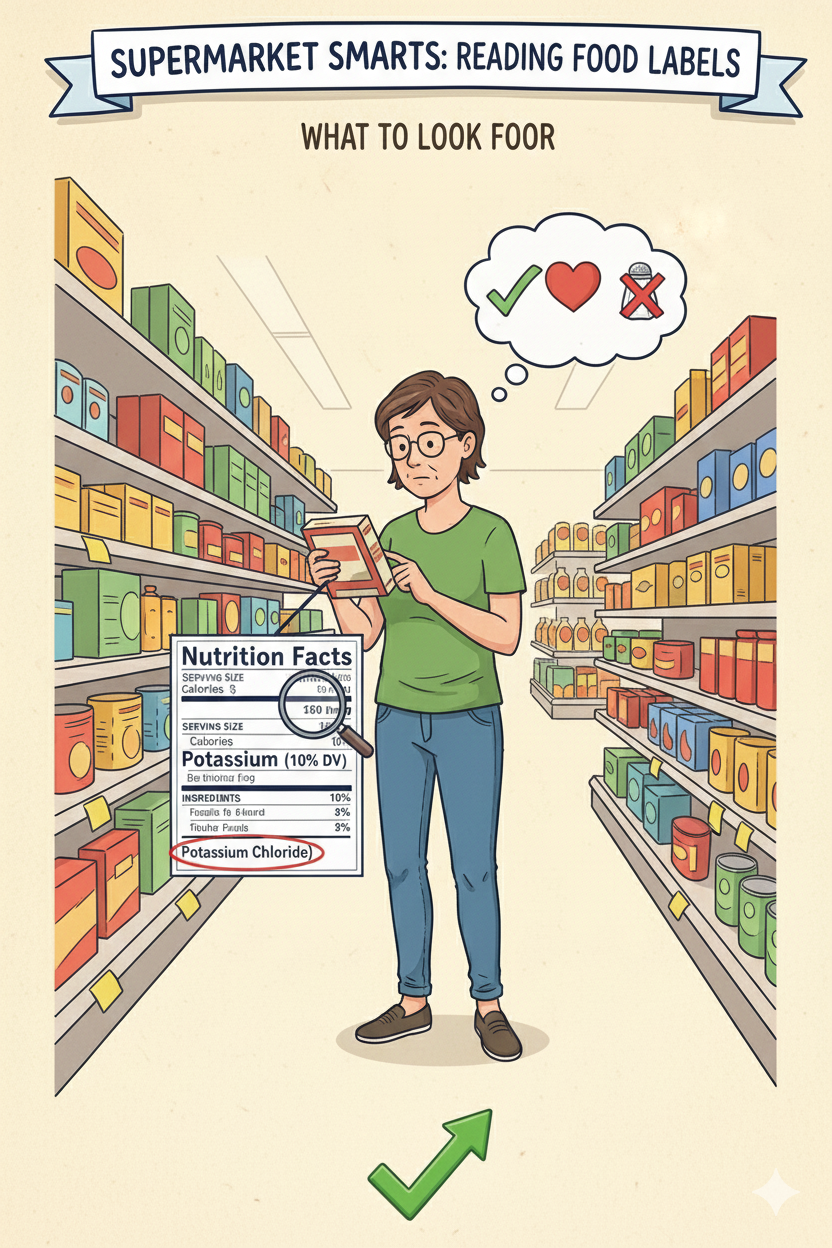
Reading Food Labels: What to Look For
Potassium is not always listed on food labels, but when it is, it can be very helpful.
When reading labels:
- Check for potassium listed in milligrams (mg) or as % Daily Value
- Aim for foods with lower potassium per serving
- Be cautious with products labeled “low sodium,” as they may contain potassium-based salt substitutes
Ingredients to watch for include:
- Potassium chloride
- Potassium phosphate
- Potassium citrate
These additives can significantly increase potassium intake even if the food appears healthy.
When Should a Low Potassium Diet Be Started?
A low potassium diet is not automatically required for early kidney disease. In many cases, potassium restriction is only needed when:
- Blood potassium levels are elevated
- Kidney function has declined beyond a certain point
- Medications increase potassium retention
Your physician will guide you on when—and if—potassium restriction is appropriate for your level of kidney function.
A Balanced, Individualized Approach:
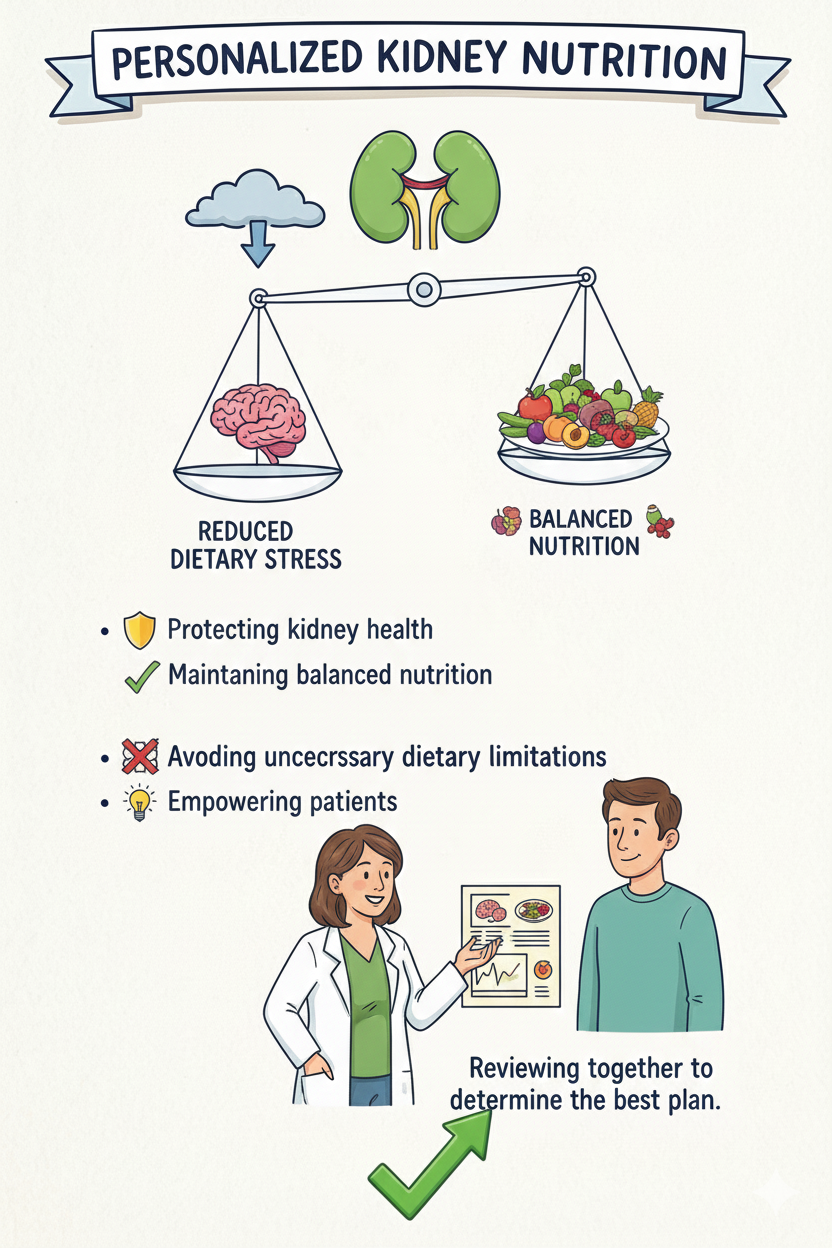
Nutrition for kidney disease should be personalized, flexible, and sustainable. Over-restriction can lead to unnecessary dietary stress and reduced nutritional quality.
My approach focuses on:
- Protecting kidney health
- Maintaining balanced nutrition
- Avoiding unnecessary dietary limitations
- Empowering patients with clear, practical guidance
If you have questions about potassium intake, food choices, or your lab results, we will review them together and determine the best plan for
Master Your Kidney Health Journey.
Don't hesitate—reach out to our team today to discuss your kidney health
concerns and take the next step toward better well-being.